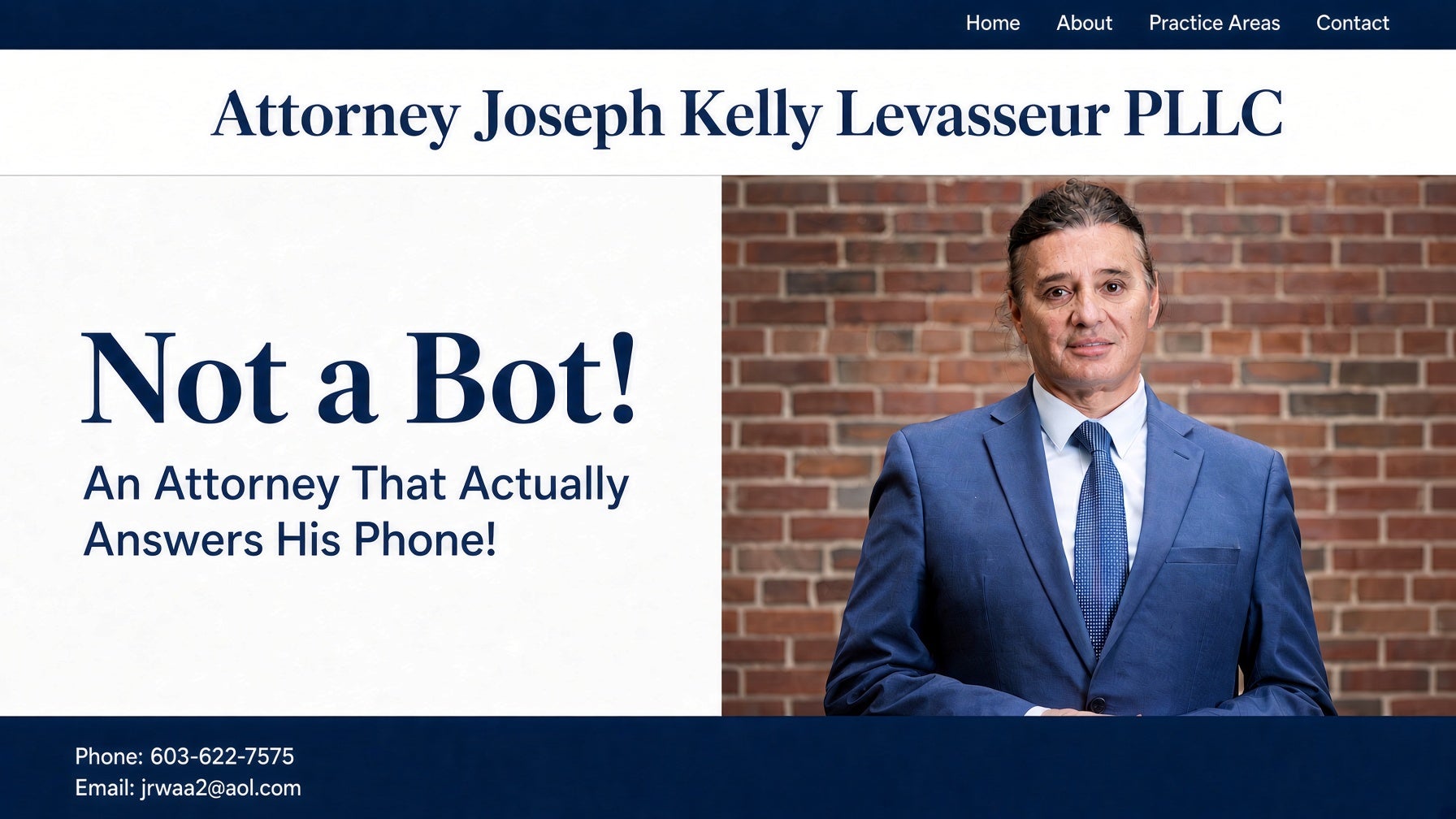
Not a Bot!™ When you call, Attorney Joseph Kelly Levasseur answers his own phone. Calls to the office ring through to his cell. No call center, no chatbot. If he is in court, leave a message and he will call you back. Tap to call 603-622-7575.
Free consultation.
Disobeying an officer is one of the most serious charges that can come out of a traffic stop. It is a criminal charge, it can cost you your license, and in some cases it can be charged as a felony. Attorney Levasseur has defended New Hampshire drivers for 24 years.
What Counts as Disobeying an Officer (RSA 265:4)
RSA 265:4 covers several kinds of conduct by a person driving or in charge of a vehicle, including:
- Refusing to give your name, address, date of birth, or the vehicle owner's name and address when an officer asks
- Giving false identifying information to an officer
- Purposely failing to stop when signaled by an officer, or trying to elude pursuit by speeding up, turning off headlights while moving, or abandoning the vehicle
- Refusing to sign your name or to produce your license or registration on demand
Penalties and How Charges Can Escalate
- Class A misdemeanor: the refusal and false-information provisions are class A misdemeanors.
- Failing to stop or eluding: a class A misdemeanor with a fine of at least $500.
- Felony: if a person who fails to stop or eludes is involved in a crash causing serious bodily injury while being pursued, the charge is a class B felony.
- License: any violation can lead to suspension of your license and registrations.
Prosecutors may also bring related charges such as reckless driving or resisting arrest. A conviction under RSA 265:4 also counts toward habitual offender status under RSA 259:39.
What Happens Next
These cases often turn on the details: whether the officer's signal was clear, whether you knew it was police, how long before you stopped, and what the video shows. Attorney Levasseur will review the reports and any cruiser or body camera footage with you. No lawyer can guarantee a result, but you should not walk into court on a class A misdemeanor alone.
Areas Served
Attorney Levasseur defends drivers in Manchester, Nashua, Salem, Derry, Londonderry, Merrimack, Portsmouth, and courts throughout Hillsborough County and Rockingham County. He also represents Massachusetts drivers, including from Lowell and the Merrimack Valley, who are charged in New Hampshire.
Disobeying an Officer FAQs
Is disobeying an officer a misdemeanor in NH?
Yes. Most forms of disobeying an officer under RSA 265:4 are class A misdemeanors. Failing to stop or eluding also carries a fine of at least $500.
When does eluding become a felony?
Under RSA 265:4, III(b), it is a class B felony if the person who failed to stop is involved in a crash causing serious bodily injury while being pursued.
Can I lose my license for disobeying an officer?
Yes. RSA 265:4 allows suspension of your license and any registrations in your name.
Can giving a fake name at a stop be charged?
Yes. Giving false identifying information to an officer is a class A misdemeanor under RSA 265:4.
How much does a consultation cost?
The first consultation is free. Fees for handling your case are explained in a written fee agreement you will review before deciding anything.
Will I actually talk to the lawyer when I call?
Yes. That is what Not a Bot!™ means. Attorney Levasseur answers his own phone, and office calls ring through to his cell. If he is in court or with a client, leave a message and he will call you back.
Related Pages
Talk to a New Hampshire Eluding & Disobeying Defense Lawyer Today
Before you plead, pay, or go to court, call Attorney Joseph Kelly Levasseur at 603-622-7575 or visit our contact page. Office: 396 S Willow St, Manchester, NH 03103. 24 years in practice.
Free consultation. Fees for handling your case are explained in a written fee agreement before you decide anything.
This page is attorney advertising and provides general information, not legal advice. Penalties described are under current New Hampshire law and may change. Contacting the office does not create an attorney-client relationship. Past outcomes do not predict future results.